

Bolivian dogs
Published:
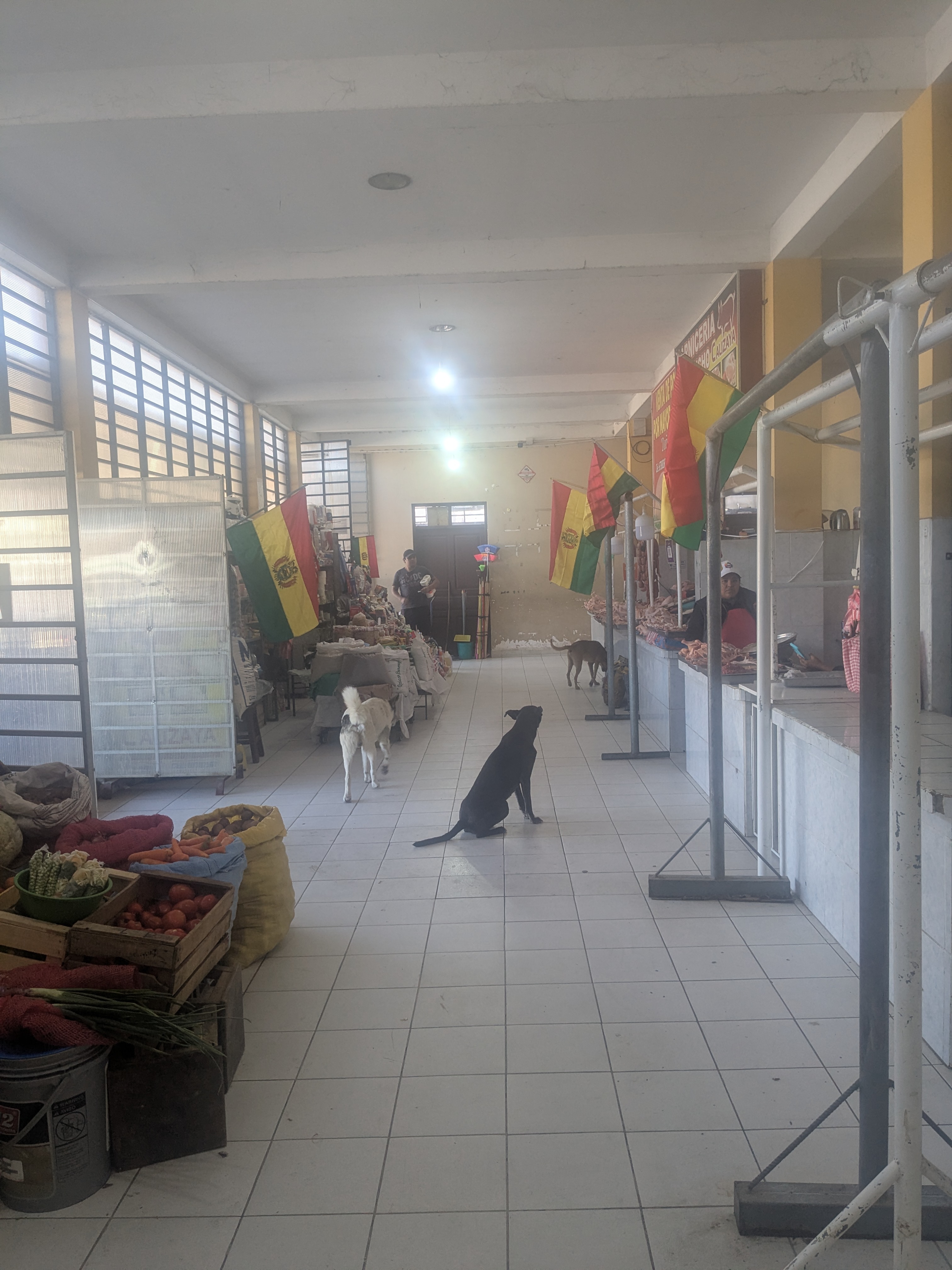
Dogs at a local market
During my latest trip to Bolivia I couldn’t help but notice one particular thing: Dogs roam freely in public. Growing up I was used to seeing dogs on the streets by themselves and never thought much of it. After being away from the country for 7 years, I noticed just how different our treatment of dogs is compared to the United States. I have a dog in the United States called Pacha. In the U.S. it’s considered irresponsible to walk your dog without a leash because it could bite someone or run into the street. This is predicated on the basis that dogs are unpredictable and we, as their owners, are liable for their behavior. Additionally, there is the empathetic side of the equation, where it’s considered careless and inhumane to let your dog outside without supervision.
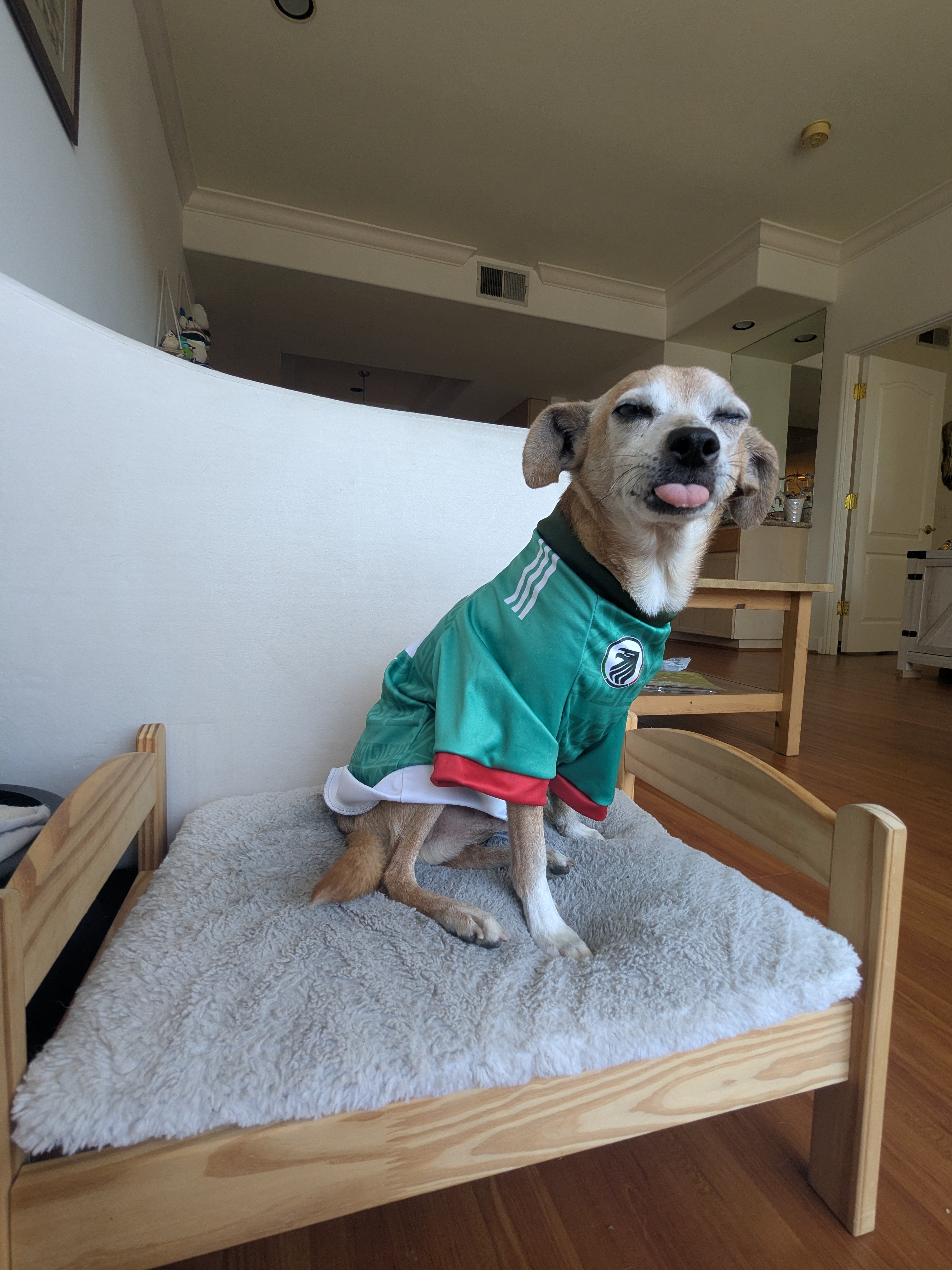
Pacha
If you walk through any town or even major cities in Bolivia, you will see a lot of dogs on the street. I believe this is true for most Latin American countries as well. Most of the time they are simply lying down on the sidewalk resting. Sometimes, you can see them walking for blocks and crossing streets as if they had a specific destination in mind. In some neighborhoods, you can even see entire gangs of dogs walking around together, intimidating passersby.
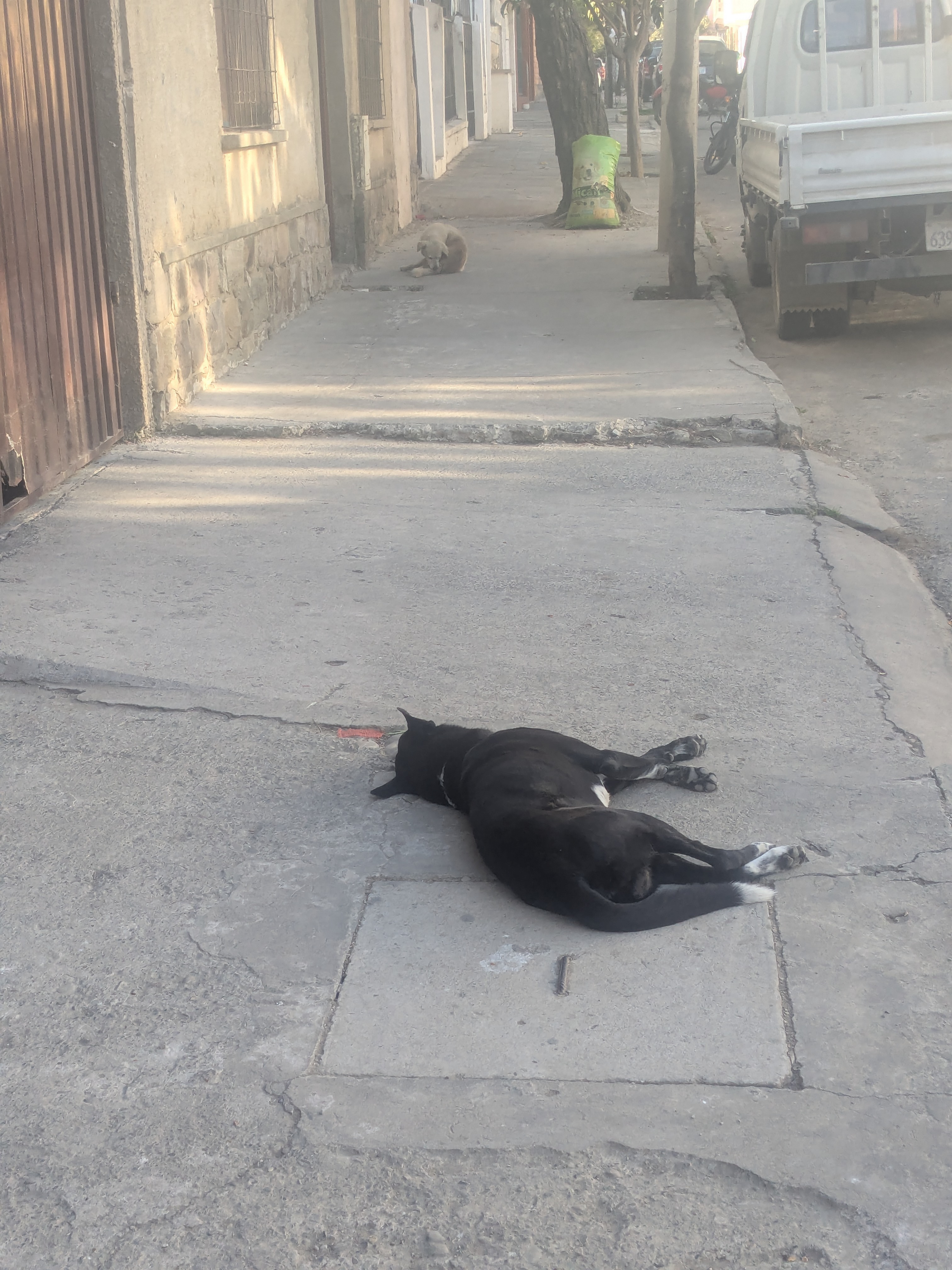 Don't you love siesta? | 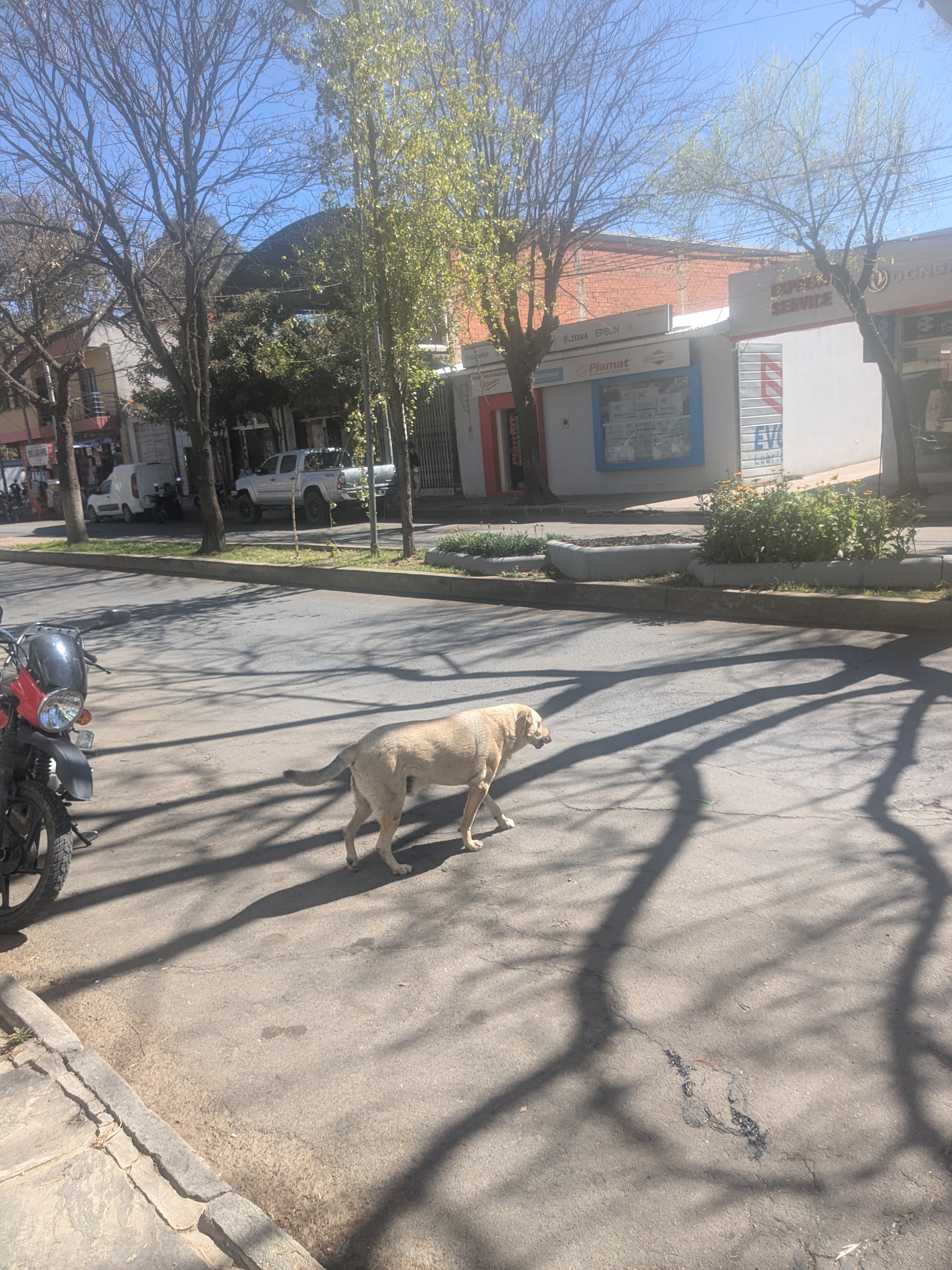 I got places to be |
Why?
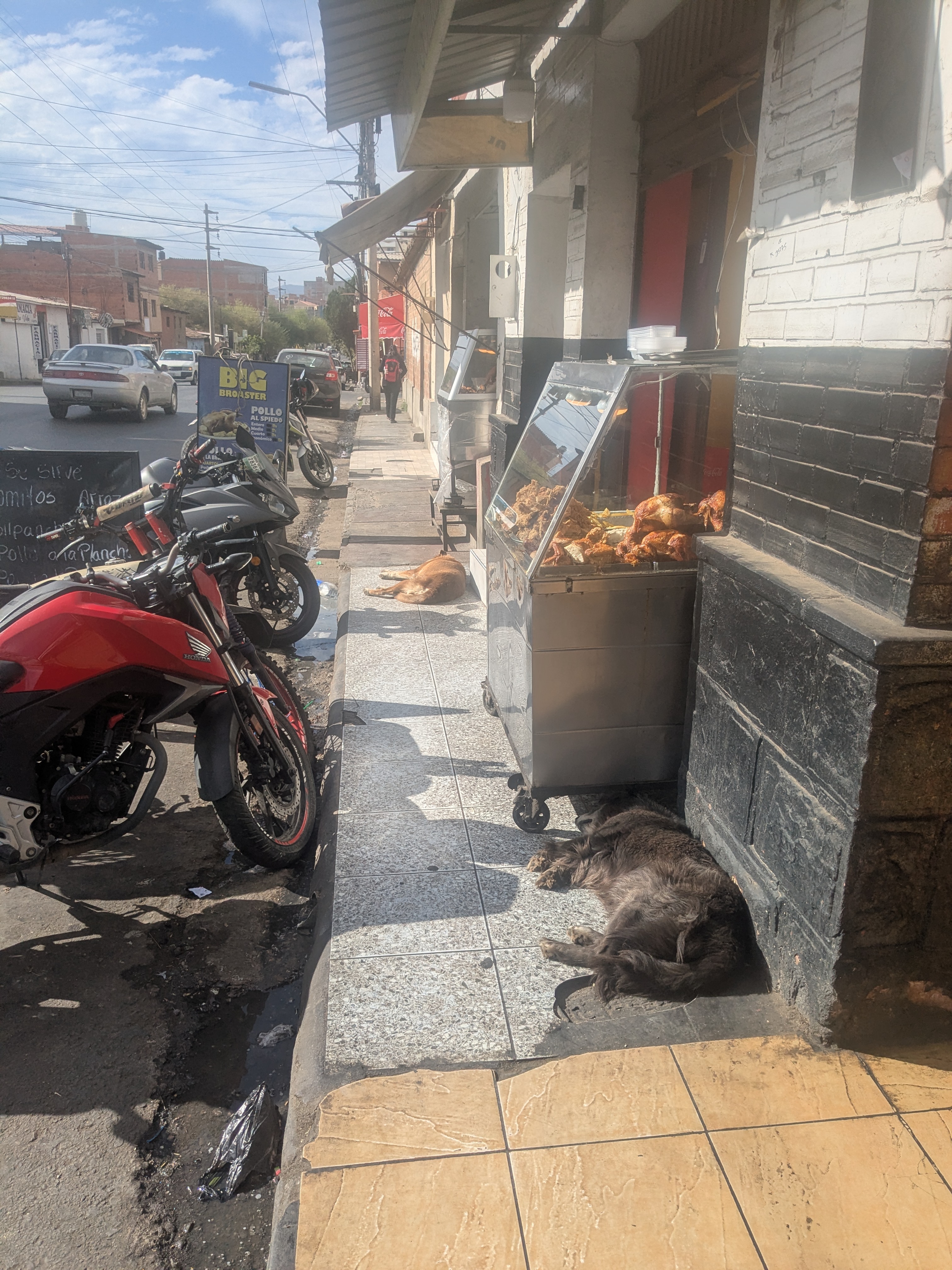
Must protect chickin
A lot of owners keep their dogs outside intentionally. I believe this is rooted in the old/traditional view that dogs are guardians of the house and therefore must stay outside to alert of any intruder. I believe in more developed countries like the U.S., this is no longer the image we have of dogs. I certainly do not expect Pacha to protect me and my girlfriend if someone breaks in. However, in Bolivia, this mentality is still very common, where people perceive dogs more like an employee than a companion. Of course this is not true for everyone. A lot of people across multiple age groups treat their pets with a lot more consideration as if they were a member of the family or even more touchingly, as their only companion.
Many families may not necessarily view their dog as the guardian but still keep their dogs outside for a different reason. Most houses in Bolivia are built wall-to-wall. This means that most houses do not have a patio or yard at all. While in the U.S. it’s common to have a lawn, a yard or some sort of outdoor area, in Latin America most families maximize their indoor living space. Most families consider having a front or back yard as easily accessible to thiefs. Dogs are also considered “too dirty” to be kept indoors, so they default to leaving them outside.
In some rare cases, dogs simply find a way to get out. Just like rebellious teenagers, my dogs at my parents’ house simply figure out how to squeeze out of our old gate to get into the streets.
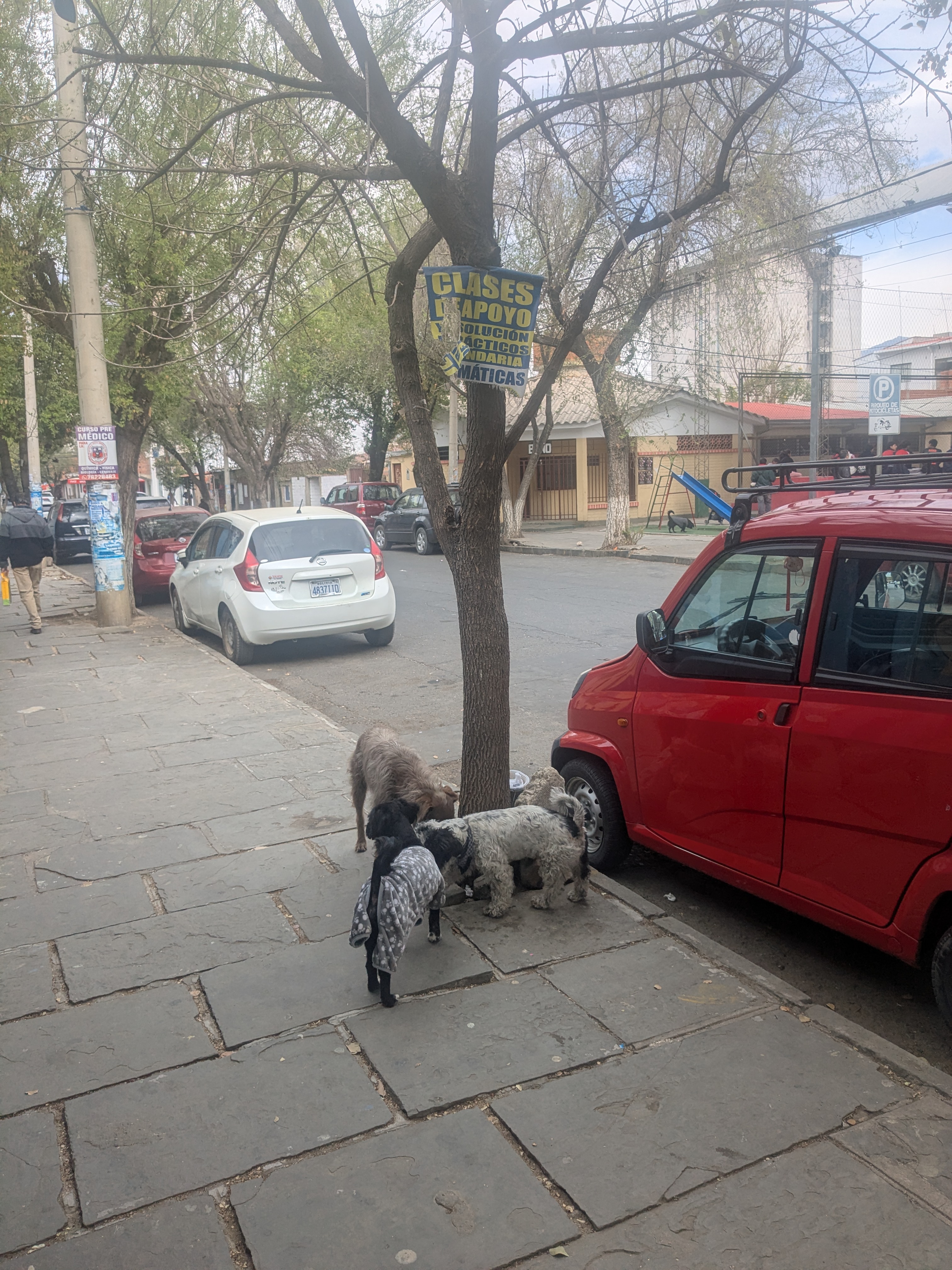
This meeting could have been an email
A canon event
The most common breakfast and dinner in Bolivia is simply a hot drink of choice (coffee, tea, chocolate) with bread. As part of our daily routine, we go to the neighborhood store to buy bread every single day (Our bread doesn’t have the amount of preservatives the American bread has, so we have to buy it fresh daily). As a kid, the short trip to the store was often more adventurous than it needed to be, because I had to dodge some of the street dogs that were quite aggressive. Most of them only barked at me, which, as a kid, is already frightening. But some of them would even go as far as to chase me down. The ‘ole-reliable’ trick was to ‘pretend throw’ a rock at them.
When you ride past a dog on your bike, they will often run after you. You learn a lot about the personality of individual dogs based on how far and how aggressively they chase after you. You can tell some of them do it out of habit or instinct, and some of them really want you to stay away from their territory. From a young age, you learn which of the neighborhood dogs are friendly and which ones are not. I believe this type of knoledge makes you appreciate them more, as you become increasingly aware of how unique yours is.
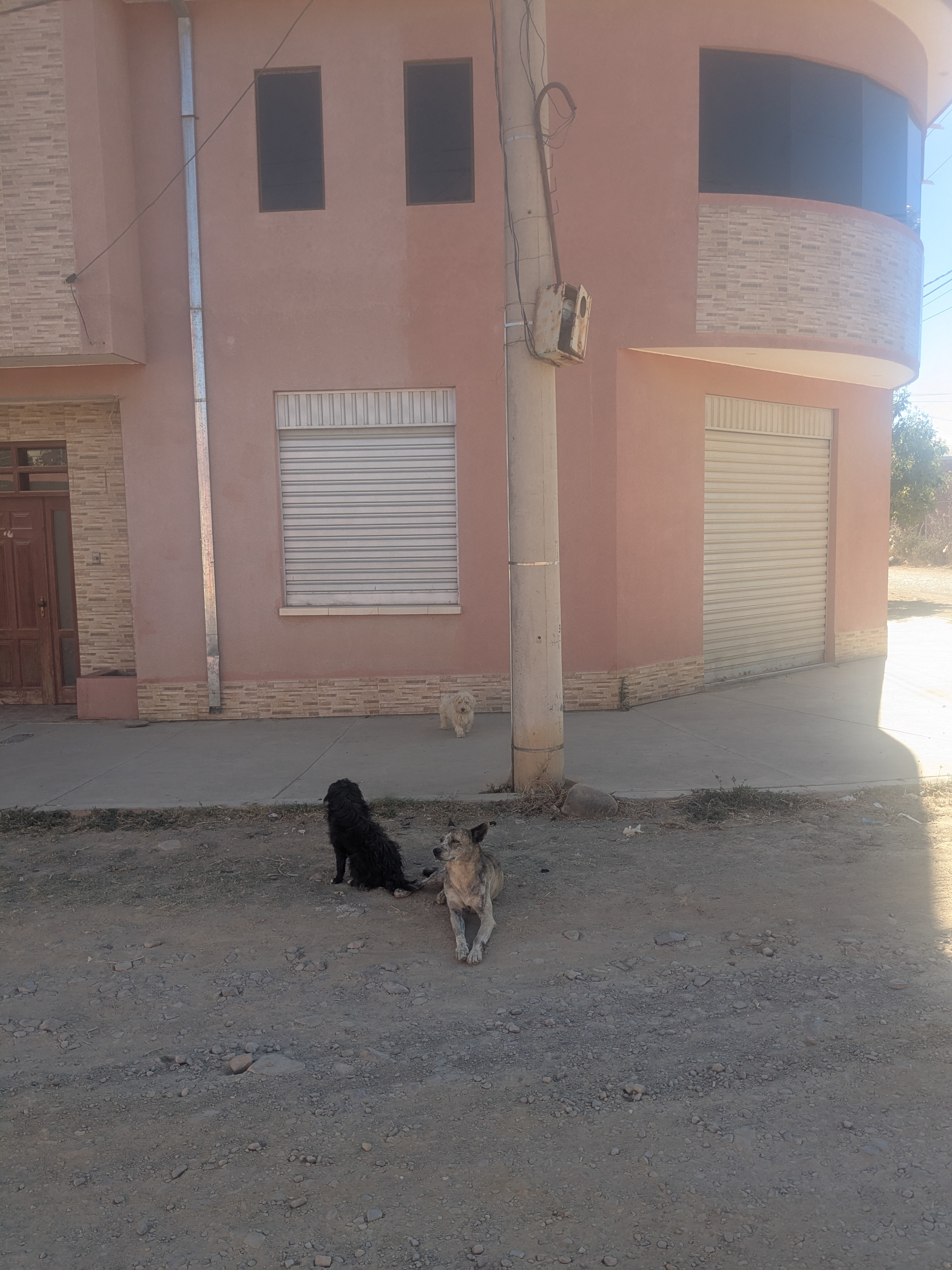
We rule this block
Public Safety
Of course one would wonder: is it not dangerous to have dogs freely on the street? Although having these dogs bite you is pretty rare, it still does happen and there have been serious cases of dogs attacking pedestrians. Many years ago, I saw a dog chase after this guy riding a motorcycle. The guy fell off and got seriously hurt. There have also been cases of dogs biting and attacking children. Recently, there was a case of a drunk guy who was attacked by a pack of dogs and died.
It is no secret that it’s not safe to have dogs in public without any sort of supervision. I don’t want to frame this article as a complaint but rather as a reflection on the differences in culture and treatment of dogs between Bolivia and the United States. I would argue that dogs back in Bolivia live a richer life than dogs in the United States, but at the expense of public safety. I have to walk my dog Pacha 3 times per day to relieve himself and get some exercise, whereas my dogs in Bolivia relieve themselves god knows where, roam the entire neighborhood, make friends (believe it or not) and enemies, start a family, and overall have a lot more freedom.
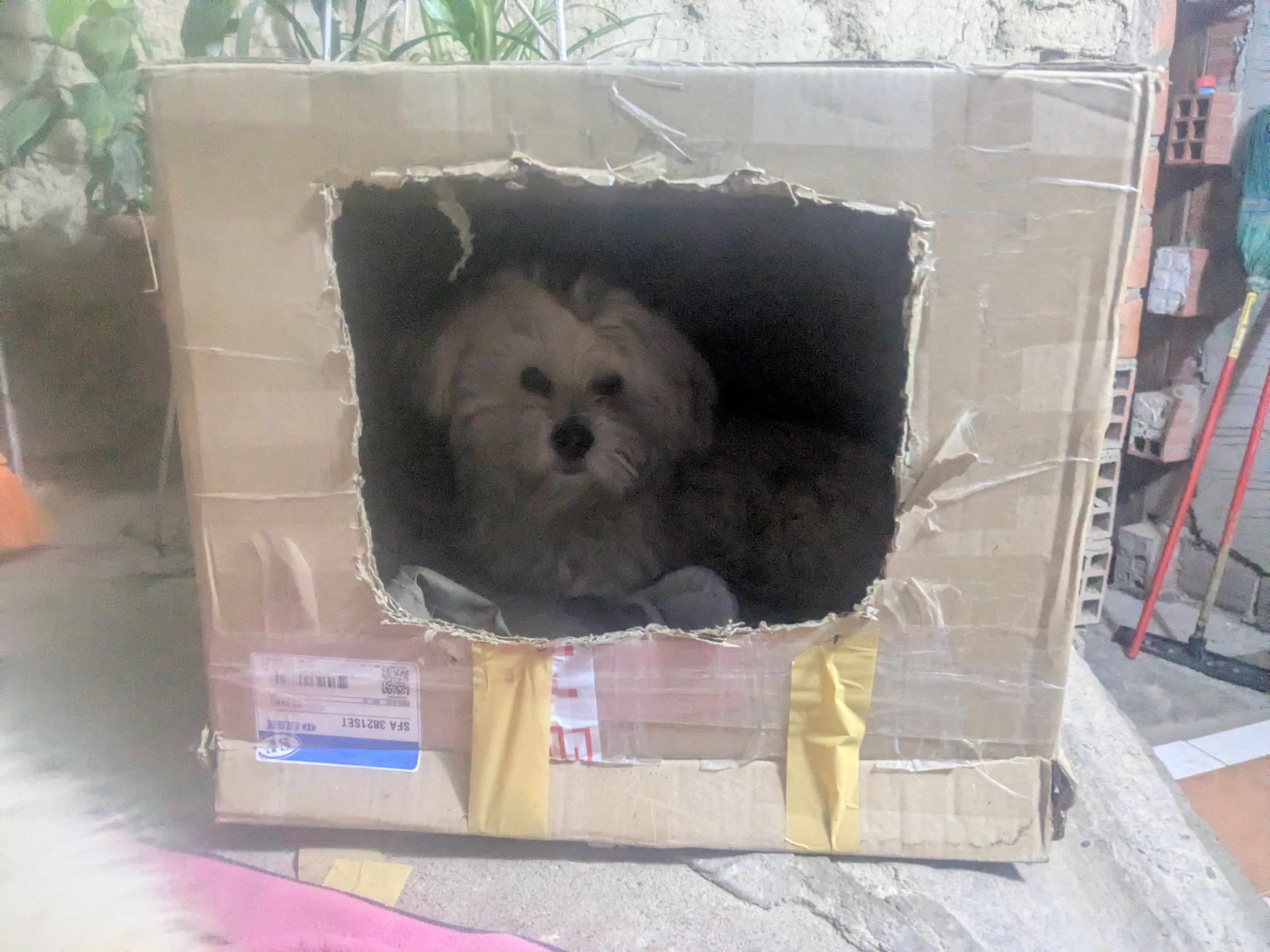
Hi friend